Bright Spring vs Bright Winter: How to Tell the Difference
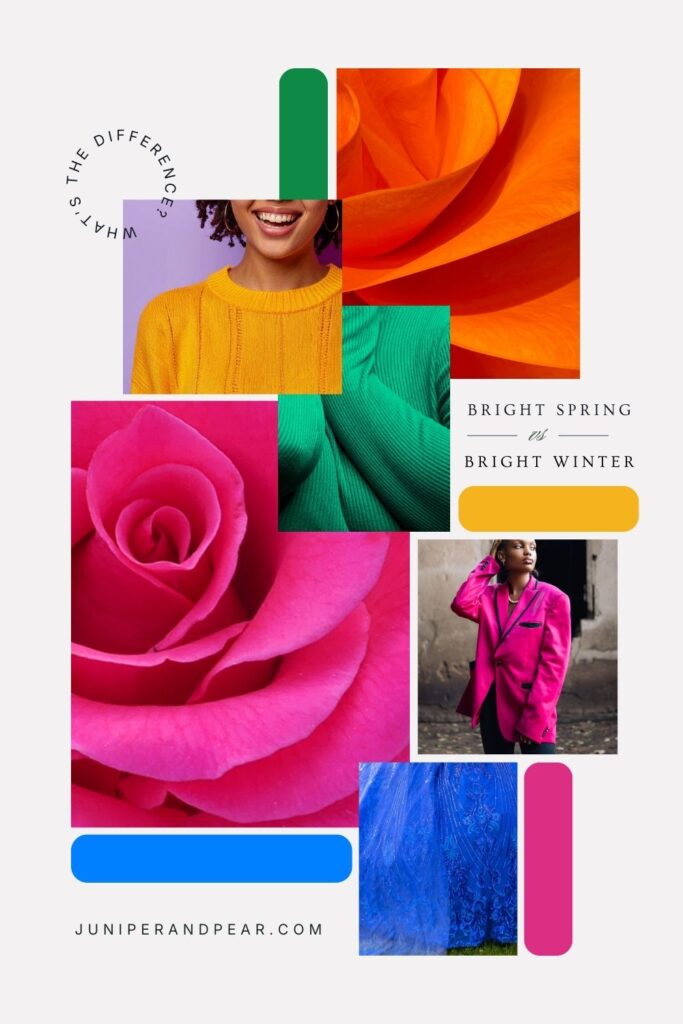
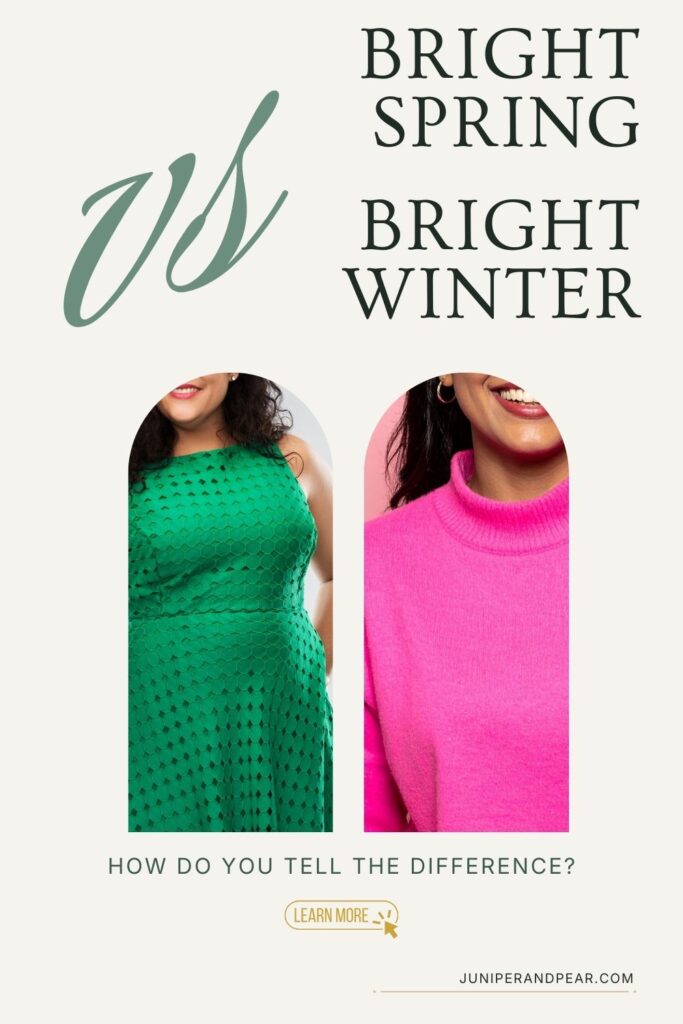
Are you trying to determine whether you’re Bright Spring vs Bright Winter? Both look lovely in soft, refined shades. So how do you tell them apart?
I want to preface this guide by saying that I think color analysis seasons aren’t rigid categories. I like to think of the twelve seasons as a spectrum rather than individual buckets. But if you’re trying to figure out where you best align, then let’s figure out if you’re a Bright Spring or a Bright Winter!
What are Warm Colors vs Cool Colors?
The fundamental distinction between Bright Spring vs Bright Winter goes back to color theory in art, warm colors vs cool colors. I think this post by Just Paint handles the idea really well.
The idea in art is that, in general, the primary and secondary colors of red, orange, and yellow are considered “warm” colors and the the primary and secondary colors of green, blue, and magenta are considered “cool” colors.
This idea of color “temperature” is just a way of categorizing colors we can see, based on how they make us feel. Red/orange/yellow feel to people more like a warm sunny day whereas green/blue/magenta feel more like cool water or the night sky.
So when we say warm vs cool colors or warm vs cool tones, or the temperature of colors, what we’re really talking about is how much red-orange is in a color compared to how much green-blue is in a color. For example, a yellow with more green in it is cooler than yellow with more red in it.
This applies to your skin and seasonal color palette as well, and is a good way to differentiate if you are Light Spring vs Light Summer.
Your Skin’s Temperature in Color Analysis
Color temperature is the key difference between Bright Spring vs Bright Winter.
Bright Spring has warm undertones. Think neutral-warm, leaning warm.
Bright Winter has cool undertones. Think neutral-cool, leaning cool.
Both seasons share the same primary characteristic, brightness. Both look best in clear, highly saturated colors. But the temperature of those bright colors determines your season.
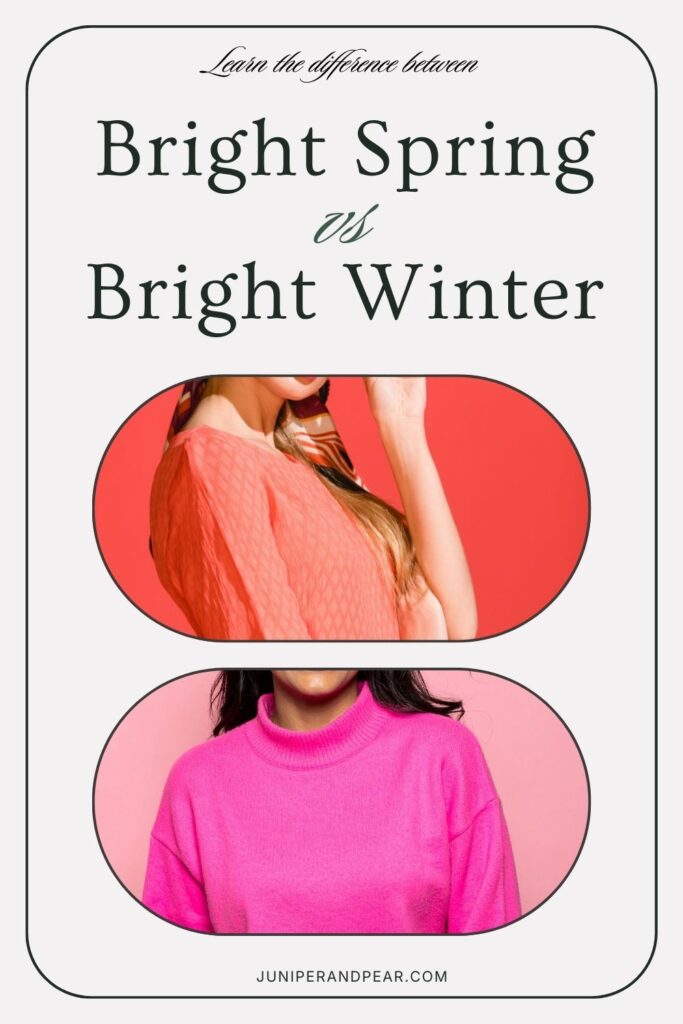
Understanding Bright Spring vs Bright Winter
Bright Spring
Bright Spring is primarily characterized by brightness with secondary warmth. Bright Springs look best in:
- Bright, clear colors with warm undertones
- Colors like bright coral, warm hot pink warm, bright turquoise, bright emerald
- Can handle both warm brights AND some cool brights (but warm is better)
- Colors that are energetic with a warm cast
Think of Bright Spring as the palette of a brilliant tropical morning, everything is vivid, saturated, and touched with golden sunlight.
Bright Winter
Bright Winter is primarily characterized by brightness with secondary coolness. Bright Winters look best in:
- Bright, vivid, clear colors with cool undertones
- Colors like cool hot pink cool, electric blue, bright magenta, bright emerald
- Can handle both cool brights AND some warm brights (but cool is better)
- Colors that are dynamic and vivid with a cool cast
Think of Bright Winter as the palette of neon lights against snow, everything is vivid, saturated, and touched with icy clarity.
Side-by-Side Color Comparisons
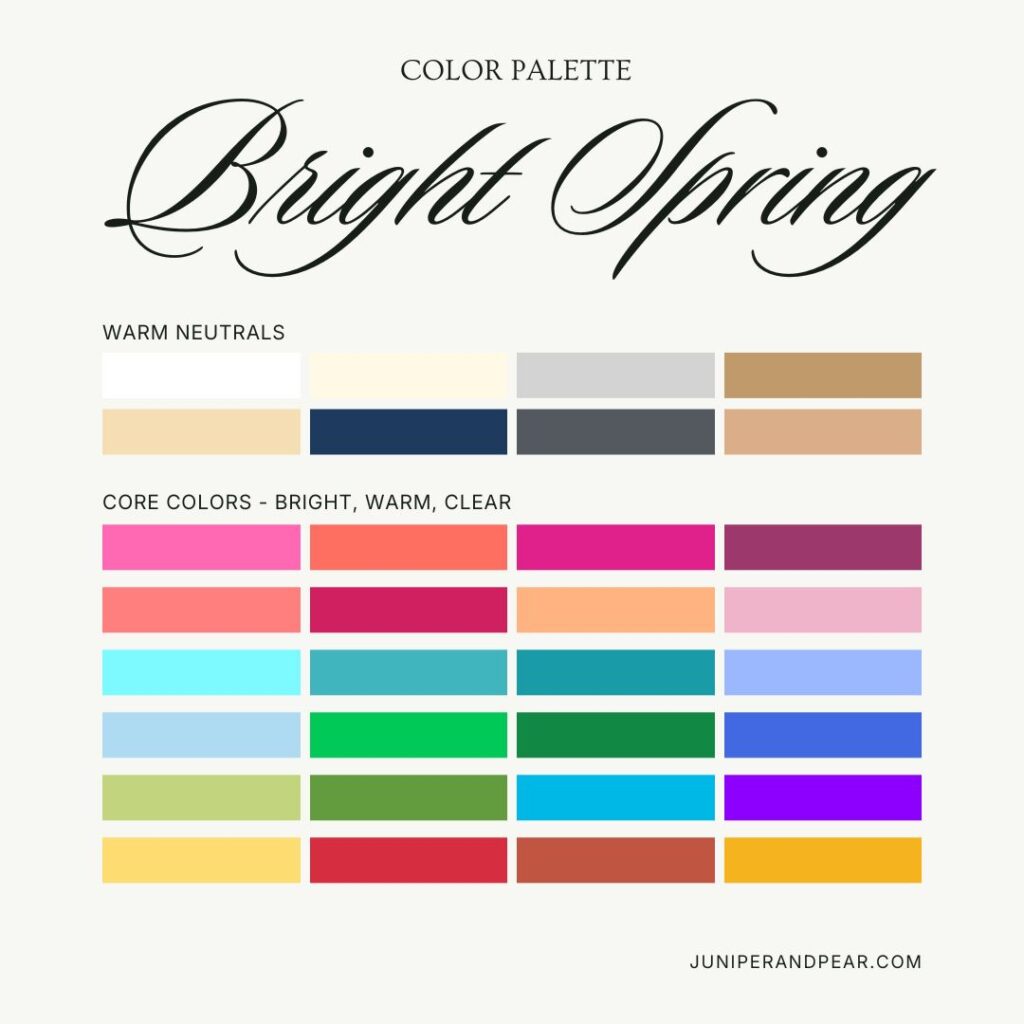
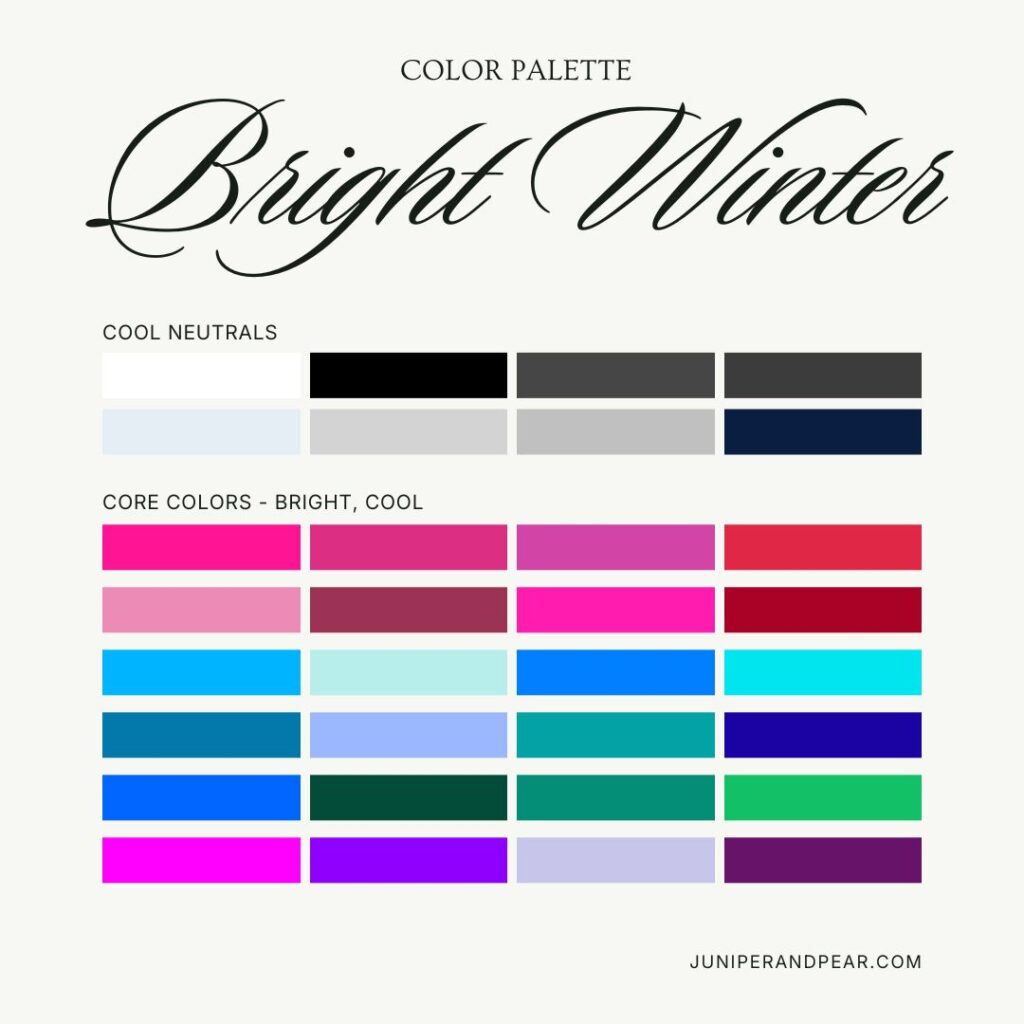
The key to distinguishing these seasons is comparing the temperature of similar bright colors:
Neutrals
Bright Spring has right white, warm gray, cream, camel, while Bright Winter has pure white, black, cool gray, icy gray.
Pinks
Bright Spring has cool hot pink, bright coral-pink, bright warm fuchsia, while Bright Winter has warm hot pink, bright magenta, bright cool fuchsia.
Blues
Bright Spring has bright warm turquoise, bright aqua, electric blue, while Bright Winter has electric blue, bright royal blue, bright sapphire.
Greens
Bright Spring has warm bright emerald, kelly green), bright lime, while Bright Winter has cool bright emerald), cool bright green, electric green.
Reds
Bright Spring has bright warm red, bright coral-red, poppy red, while Bright Winter has bright cool red, true red, bright magenta-red.
Purples
Bright Spring has bright warm purple, bright periwinkle, while Bright Winter has cool purple, vivid violet, hot purple.
How to Test for Bright Spring vs Bright Winter
Test 1: The Coral vs Magenta Test
What you need: A bright coral item and a bright magenta item
What to do: Hold each color near your face in natural daylight and observe.
Bright Spring result: Bright coral makes your skin look clear and even. Bright magenta is okay but not quite as perfect, you look slightly cooler than your natural warmth.
Bright Winter result: Bright magenta makes your skin look clear and beautiful. Bright coral is okay but makes you look slightly warmer or off.
Test 2: The Yellow Test
What you need: A bright yellow item (either warm golden or cool lemon)
What to do: Hold each color near your face in natural daylight and observe.
Bright Spring result: Bright golden yellow or warm lemon yellow looks beautiful.
Bright Winter result: Cool bright yellow or icy lemon looks best. Warm golden yellow can be too warm.
Test 2: The Warm vs Cool Bright Test
What you need: A clearly warm bright color (like bright orange) and a clearly cool bright color (like bright fuchsia)
What to do: Hold each color near your face in natural daylight and observe.
Bright Spring result: Bright orange looks incredible. Bright fuchsia works but might be slightly too cool.
Bright Winter result: Bright fuchsia looks striking and perfect. Bright orange might be slightly too warm.
Test 3: The Metal Test
What you need: Find at least one piece of gold jewelry and one piece of silver.
What to do: Compare how you look in gold vs silver jewelry
Bright Spring result: Both can work, but gold often looks slightly better. Rose gold works beautifully.
Bright Winter result: Both can work, but silver often looks slightly better. Cool metals are preferable.
Important note: Both Bright seasons can wear multiple metals better than other seasons, so this test alone isn’t definitive.
Common Confusion Points
This is actually common for both Bright seasons because they’re neutral-leaning. However, one temperature will still be more harmonious than the other. It helps a lot to compare specific colors (coral vs magenta) rather than broad categories.
Many Bright Springs can wear black successfully, especially away from the face. The difference is that Bright Winters look spectacular in black, while Bright Springs look good but might look even better in bright navy or charcoal.
Hair color doesn’t determine your season, skin undertone does. A Bright Winter can have warm-toned hair if their skin has cool undertones.
Compare very clearly warm brights like orange and coral to very clearly cool brights like magenta and cool fuchsia. One will feel more “you.”
Styling Differences between Bright Spring vs Bright Winter
Bright Spring Styling
A Bright Spring might wear:
- Bright coral blouse with white trousers
- Bright turquoise (warm) dress with gold accessories
- Electric blue (warm) cardigan over cream top
- Hot pink (warm) with camel or warm gray
Bright Winter Styling
A Bright Winter might wear:
- Bright magenta blouse with black or white trousers
- Electric blue (cool) dress with silver accessories
- Bright purple cardigan over white top
- Hot pink (cool) with black or cool gray
Makeup Differences
Bright Spring Makeup
- Foundation: Warm, neutral-warm, golden, or peachy
- Blush: Bright coral, hot pink (warm), bright peach
- Lipstick: Bright coral, hot pink (warm), bright warm red, bright orange-red
- Eyeshadow: Bright turquoise (warm), bright green, bright purple (warm), bright gold
- Eyeliner/Mascara: Black works, but bright navy or teal can be beautiful
- Nails: Bright coral, electric blue, bright periwinkle
Bright Winter Makeup
- Foundation: Cool, neutral-cool, pink-based, or cool beige
- Blush: Hot pink (cool), bright magenta, bright fuchsia, bright cool pink
- Lipstick: Hot pink (cool), bright magenta, bright cool red, bright fuchsia
- Eyeshadow: Electric blue, bright purple (cool), bright teal (cool), bright emerald
- Eyeliner/Mascara: Black works beautifully, or bright purple, electric blue
- Nails: White, bright cool pink, royal blue, navy
The Temperature Nuance
This is subtle but important: Both seasons are described as “neutral” in temperature:
Bright Spring = Neutral-WARM
- Primarily warm, but can handle some cooler brights
- Still better in warm brights overall
- Warm brights are 80%, cool brights are 20%
Bright Winter = Neutral-COOL
- Primarily cool, but can handle some warmer brights
- Still better in cool brights overall
- Cool brights are 80%, warm brights are 20%
What If You’re Neither?
If both Bright Spring and Bright Winter colors seem wrong, consider:
- True Spring if you need warmth but can’t handle cool brights at all.
- True Winter if you need coolness but can’t handle warm brights at all.
- Light Spring if bright colors are too intense and you need softer colors.
- Deep Winter if you need more depth than brightness.